Sunday, April 3, 2022

Got Mint?


JMJT! Praise be Jesus Christ! Now and Forever!

As we traverse the final weeks of Lent before Holy Week, I have found myself
in the room of self-knowledge with a ever-widening magnifying glass which 
underscores the deep reality of my sins, wounds and failings in increasing clarity. 
Of course, this is a gift as God brings such interior distortions to light in order to heal them and increases my humility and sense of child-like dependence upon Him. By His grace, I have been able to bring several of these to Confession this Lenten season and rejoice for that! At the same time, I find myself in my sometimes melancholic temperament getting weighed down with such realities and ruminating over my own lack of correspondence to His Divine grace, and over the difficulties in overcoming some of these challenges and short-comings in my life.  I begin to doubt and my faith flags as I wonder how all of this can be resolved especially in the reality of my daily life.  I get on a hamster wheel of negativity in questioning God, doubting myself, and blaming others for what I see here.  This lack of surrender and prideful power-tripping taints any semblance of humility within, disturbs and frustrates my peace, and causes even more shame and guilt. And so begins the process all over again. I find that the enemy is ceaselessly at work in his dialogues with me and I am exhausted in how this is playing out in this Lenten desert.   

This seems to be what the Desert Father Evagrius Pontus speaks of in his book Talking Back, where he explains that the devil attacks our thoughts as an initial battlefield for supremacy and to try to sow a spirit of confusion and despair.  We must resist it and use the Divine Words of Scripture to do so. He suggests that for those that suffer from the demon of sadness that we quote, "Do not let your hearts be troubled. Have faith in God, have faith also in me" [John 14:1]. And for one who feels tested beyond his strength, "God is faithful, and he will not let you be tested beyond your strength, but with the testing he will also provide the way out so that you may be able to endure it" [1 Cor 10:13].

St. Teresa of Jesus speaks of resisting such thoughts by going into the room of self-knowledge frequently, where one is given deeper levels of understanding one's failures and resistance to cooperate with Our Lord's grace, but also where one is given the knowledge of God's greatness. This allows one clarity in seeing who one is, but also lucidity in knowing who God is and encountering His Divine attributes of mercy, love, omnipotence and omniscience.  As we grow in self-knowledge, we are hopefully growing in knowledge and love for God. True humility is being able to see who one truly is in a spirit of peace, gratitude, and praise, while simultaneously recognizing God's Grandeur, Generosity and Divine Love for us even in our littleness.  

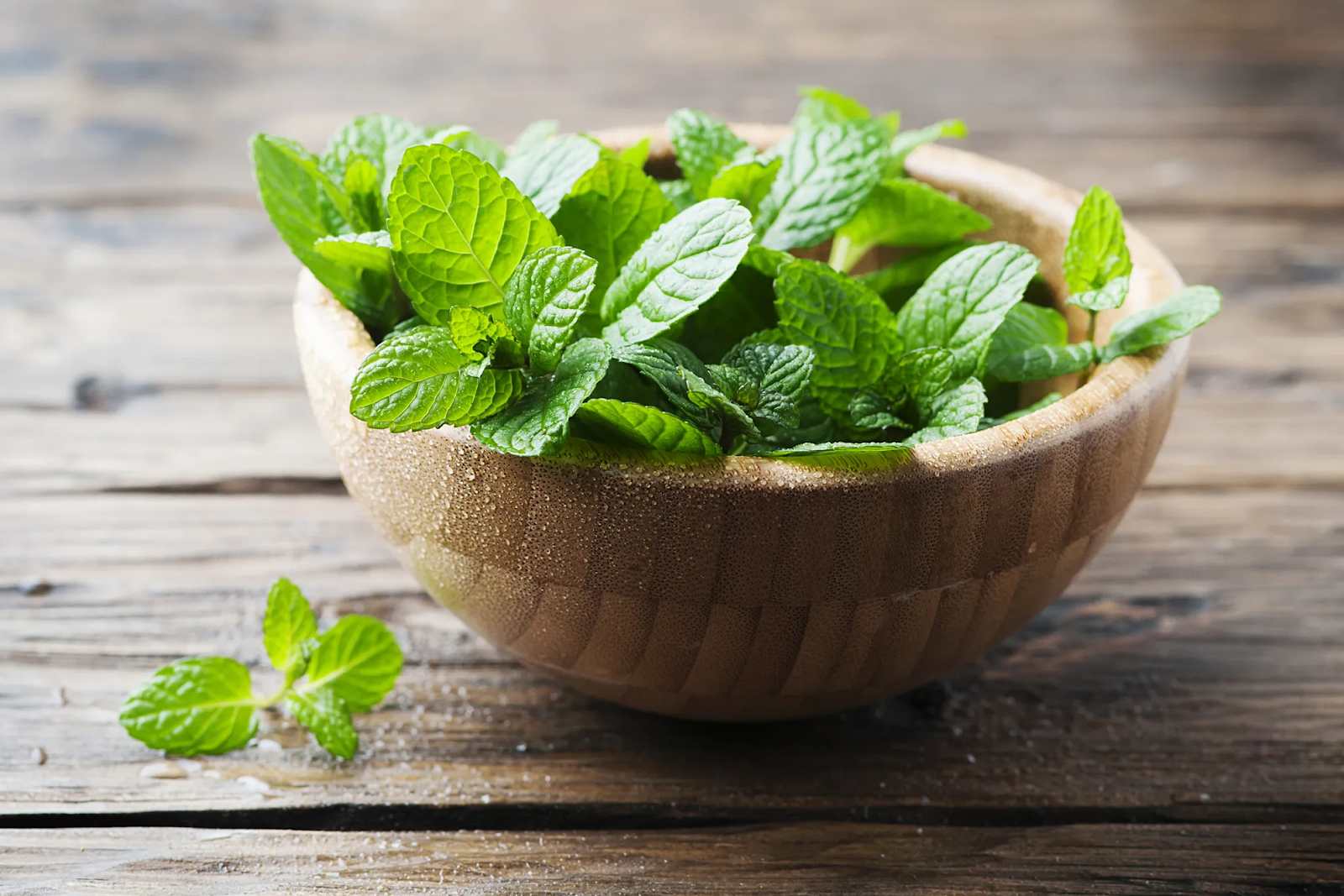
One afternoon this past week, I was pondering certain situations and continuing this interior dialogue as I finished some errands.  I was lamenting some challenges in my life.  In the midst of this, I walked into the grocery store and headed for the produce department.  I was looking for a few items for vegetarian chili in a smaller grocery store with a more limited selection.  As I wandered about looking for fresh cilantro, a friendly somewhat disheveled older woman began to strike up a conversation with me.  She was sharing how completely delighted she was in discovering that they had fresh mint in little bundles that had just arrived! She gave me a toothless grin and began to rejoice in the many ways that she loves mint- in her iced tea, with fruit, and other assorted recipes.  Her eyes glimmered as she told me about how mint reminds her of spring, and the smell invigorates and refreshes her. This lovely woman was very enthusiastic about mint and her zeal was contagious! As a lover of Andes chocolate mints and mint glaze on lamb, I began to think about how truly awesome mint really is and what a blessing it is to be able to come into a store and have it available to take home and provide a fresh flavor to various dishes. As she continued speaking with me and helped me look for the hidden location of the cilantro, I knew that Jesus was speaking to me through her! 

My spirit was aware of His call for me to come out of myself and to encounter Him in the little things, and through a spirit of child-like delight, wonder and gratitude.  It was obvious from appearances that this woman's life had not been an easy one, and yet here she was expressing such profound joy in the availability of fresh mint.  Beyond her soliloquy about fresh mint, this woman had such interior freedom in encountering others that she not only helped me find the missing cilantro that we eventually found on a high shelf, but also assisted another customer who was wondering which avocados to purchase.  The longer I spoke with this lovely lady and observed her, the more beautiful she became. Her face revealed the radiance of her spirit and her attitude of gratitude filled her surroundings. I felt blessed to encounter this special woman, and I knew that Our Lord was teaching me a very important lesson about the linkage between humility and gratitude, and about not getting bogged down by my own plentiful failings and difficulties, but instead looking up to the One who rescues and saves me and makes a way for me.

What an excellent opportunity for me to get out of my darkened thoughts and back to the basics of praise and thanksgiving! The Catechism of the Catholic Church tells us that 'every event and need can become an offering of thanksgiving' [CCC# 2638]. This is built upon Jesus' example, and the words of St. Paul that teach us to 'Give thanks in all circumstances; for this is the will of God in Christ Jesus for you' [1 Thess 5:18].  The Catechism further develops praise as a form of prayer that 'lauds God for his own sake and gives him glory, quite beyond what he does, simply because HE IS...Praise embraces the other forms of prayer and carries them toward him who is its source and goal: 'the one God, the Father, from whom are all things and for whom we exist' [1 Cor 8:6] [CCC#2639]. Indeed, all is gift and an opportunity to love God, others, creation and myself amidst my poverty. The joys and sorrows of life, the blessings and Cross all are transformed when I become little and experience awe and delight in how God loves me and reveals Himself to me even amidst my brokenness and that of the world. 

I recently learned that the Tribe of Judah means 'praise' and this tribe always preceded and led the other tribes of Israel during their journeys and in times of battle with song, jubilation, thanksgiving, and worship. This was believed to honor God most profoundly and to call upon His Divine Presence in their daily lives. The importance of such praise is remembered in the recitation of Morning Prayer in the Liturgy of the Hours as we start our invitatory with Psalm 95 which acclaims:

    Come let us sing joyfully to the Lord;
    Let us acclaim the rock of our salvation;
    Let us greet him with thanksgiving;
    Let us joyfully sing psalms to him. [Ps 95:1-2]


Wow! These are the first words to pass from my lips in the morning,
when meeting the Lord. Like the tribe of Judah, my heart is to sing his
praises for Who He Is, and rejoice in His Holy Name, HIs Merciful Heart,
His grandeurs, power, beauty, goodness, truth, and all the other Divine
attributes that He shares with me every day despite my weaknesses.
What good news indeed that amidst my transgressions, that He meets me there
in the room of self-knowledge and lifts me up as a child onto His lap! 

The necessity of praise and thanksgiving as the first posture of my heart helps me to rightly order my interior life.  Yes, the room of self-knowledge and humility is absolutely central and key to my sanctification, purification and growth, but it is to be done with a song in my heart,
a hum of praise and thanksgiving upon my lips, knowing who I am in my complete littleness, under the shining rays of light of His Merciful Love, and in taking heart in knowing who God is and how He delights in me, meets me where I am at, and runs to place His ring upon my finger and the robe upon me as His prodigal daughter. 

I am so grateful for my little surprise rendezvous with my dear sister at the grocery store this past week!  Her thanksgiving for the small things, her beautiful smile and kind eyes will always be with me in teaching me about the importance of going beyond my sins and Crosses in life to a place of gratitude and joy. As a result, these past few days when tempted to complain or enter some of that darkness within, I have found myself thanking God for mint which refreshes the body and soul, and for the small and big people and things in my life that bless me deeply and profoundly. I have been able to raise my mind and heart to God in a spirit of praise and thanksgiving, and then entrust all of my needs to Him knowing that 'the Lord is good, His mercy is everlasting, and his truth endures to all generations' [Ps 100] and to not be anxious about my sins, 'but in everything with prayer and supplication with thanksgiving, let your requests be made known to God [Phil 4:6].

Got mint? 


Saturday, March 12, 2022

Madre Teresa: An Ode to her Spiritual Motherhood

JMJT! Praise be Jesus Christ! Now and Forever!

Today we celebrate the 400th anniversary of St. Teresa of Jesus' canonization. What a glorious day for the Church then until this present day! St. Teresa's influence regarding prayer and how to live out the call to universal holiness for every vocation continues unabated and speaks to people of all different religious backgrounds, cultures, interests, and professions. Indeed, her foundations of the Discalced Carmelite Order have had  a profound impact on history within the Church, various forms of creativity and art, as well as in geopolitical matters. It can be said that St. Teresa is truly a spiritual madre who has helped to form and birth many spiritual sons and daughters throughout the world.  This is a little poem I wrote several years ago to honor Teresa's maternal guidance, practicality, wisdom and love that she has shared so generously with me and so many others. 

Madre Teresa: An Ode to her Spiritual Motherhood


Trimester I

Passive receptivity

Spirit, come!

Quiet fiat

Jesus, beside her,

Opened mind,

Opened heart

Soul laid bare.

Pierced with heavenly dart of love,

Divinely overshadowed.

Gifted with flash of castle,

Divinely instructed.

United with the Three,

Incarnation of the new Carmel.


Trimester II

Madre Teresa, spiritual womb of Carmel.

Encasing reformed order within

Nurturing the garden of this new vineyard,

Tilling the earth founded upon Elijah and Mary

In your interior soil of prayer and humility,

With love and obedience.

Seeds germinating within

Flowing waters of prayer

Sowing, sustaining

Anointed words of divine wisdom

Releasing seedlings carried on the breeze

Bringing glad tidings to chosen souls.


Trimester III

Maternal womb of Carmel, expansive tent

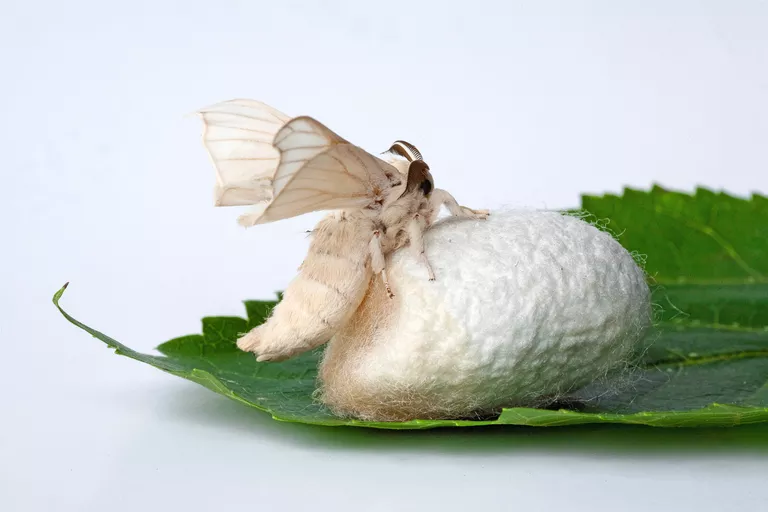
Cocoon pregnant with anticipation of new life

Metamorphosis, straining towards [life-giving] union

Birthing of a new Carmel carried on damp

Butterfly’s wings

Under the burning heat of the Spirit’s love

This dart of fire tinged aglow with Word and Breath

Behold! He is doing something new!

Foundations rapt in love of God and neighbor

Generating brides in this verdant meadow

Fading mirage of self, fresh eyes turned towards the Beloved's Face

Rapt in Jesus’ Crucified love.

Madre Teresa, Madre. 


See also: http://carmelphoenix.blogspot.com/2014/10/st-theresas-butterflies.html


Friday, March 11, 2022

Crossing the Suspension Bridge in the Jungle of my Soul

JMJT! Praise be Jesus Christ! Now and Forever!

The season of Lent is now in full swing, and the disciplines of prayer, fasting, and
almsgiving in more intentional and sacrificial ways beckons us to go out into the desert
to meet our Lord Jesus. As I respond to this invitation of purification and simplification
to give space for an increased intimacy with Our Lord, I have become aware of the 
jungle of my mind and heart where various hopes and desires, both ordered and disordered,
war within.   I recognize that the wars that currently rage between the peoples of the Ukraine and Russia, the terrorists in Afghanistan, civil groups in Ethiopia and Myanmar, and drug cartels in Mexico are but a spill-over of what is sometimes brewing within my own heart, decisions, thoughts, and actions.


A few weeks ago the Lord gave me an image of a suspension bridge.  The etymology of this 
word comes from the Latin word 'sub' which means under and 'pend' which means to hang or to balance. It is a means of absorbing shock or balancing something or someone. This symbol was given to me associated with virtue which is  the center point between extremes of excess and deficit in the passions.  

I have been reviewing the meaning of this concept and found that according to the Catechism of the Catholic Church, virtue is connected with "Whatever is true, whatever is honorable, whatever is just, whatever is pure, whatever is lovely, whatever is gracious, if there is anything worthy of praise, think about these things." [Phil 4:8]. It goes on to explain human virtues as 'firm attitudes, stable dispositions, habitual perfections of the intellect and will that govern our actions, order our passions, and guide our conduct according to reason and faith' [CCC #1804].  Human or moral virtues are habits that are acquired by human effort undertaken in a spirit of perseverance and elevated by God's grace. They are developed over time by freely practicing the good with repeated effort. 

The four cardinal virtues upon which all the other moral virtues are grounded consist of  prudence, justice, fortitude, and temperance.  The three theological virtues are faith, hope, and love. As St. Paul tells us, charity is the greatest of these as it imbues all the other virtues towards harmony with the Divine Will. I would add that many of the greatest saints and doctors of the Church including St. Augustine and St. Teresa of Jesus speak of humility as being the greatest virtue upon which all the others are founded, since we are wholly dependent upon the Lord to do anything.

In our humanity, we experience feelings or passions as movements of the sensitive appetites that influence us in our decisions 'to act or not to act' in response to a perceived good or evil [CCC # 1763].  These are gateways between the life of the senses and the life of the mind, with our hearts as its source and center point.  The suspension bridge is a connecting point between our hearts and our minds.  Our feelings and our thoughts. Passions are neither good nor evil, but instead neutral until acted upon.  This is where the war within begins.  Every situation provides an opportunity and a choice to respond in a place of love that magnifies the Lord, or in a place of ego-driven self-interest.  I can operate in a posture of deficit and withhold love, in an extremity of a passionate storm that is destructive, or I can offer a gift of myself and the Lord will multiply that love. 


If I respond with balance in what is being called for in a given situation in cooperation with the Holy Spirit and the graces of the Lord, I am able to avoid deficiency or excess and instead maintain harmony within my own heart and mind regardless of the other person's actions, words or response.  The suspension bridge maintains equilibrium and I do not lose my balance or footing and fall off over the handrails.  If the winds of my passions push me too far towards the extremes of either complete depletion or exaggeration, I fall overboard.  At that moment, I am temporarily unable to continue on the journey towards increased intimacy with Jesus, but am instead bushwhacking through the jungle between my mind and heart, off the path, and under the bridge.

Of course, the Lord is always there to meet us in the wilderness within and will assist us in helping to get back up and onto the narrow bridge that we traverse during Lent from the old man within ourselves to the new one. These are the moments when we are face to face with our weaknesses and invited to exercise the great virtue of humility in recognizing our own limitations and dependence upon God.  In a sense, even such falls are opportunities to develop virtue. We recognize the truth of what St. Philip Neri  imparted so many centuries ago, 'Do not grieve over the temptations you suffer. When the Lord intends to bestow a particular virtue on us, He often permits us first to be tempted by the opposite vice. Therefore, look upon every temptation as an invitation to grow in a particular virtue and a promise by God that you will be successful, if only you stand fast.'

Through our littleness, Jesus can teach us to recognize the voice of the enemy in our hearts and minds - the patterns that trigger such moments that precipitate falling off our inner suspension bridge, and the subtle suggestions that encourage us to respond to our passions in ways that invite the seven deadly sins to rule us.  He will re-clothe us with the armor of God and impart the power of the Holy Spirit to us.  He will bring us back to the center of His Sacred Heart and teachings which operate out of Divine Love and Mercy, the Beatitudes and the seven gifts of the Holy Spirit which include wisdom, understanding, counsel, fortitude, knowledge, piety, and fear of the Lord.  With His Divine assistance, along with the Sacraments, study, and prayer we will be able to cooperate more fully with Divine grace and strengthen the muscles of the virtues and their practice in our everyday lives. Over time, the fruits of the Holy Spirit will begin to abound in our lives and these vices will be replaced, and more fully perfected and completed within our souls and lived out.  


The suspension bridge that unites our heart with our mind can appear intimidating and downright dangerous. And in many ways, it is.  However, when traveling with Our Lord Jesus we learn how to traverse 
the middle path of virtue between the deficit and excess of our passions and appetites. He assists us to stay safely within the guardrails by avoiding extremes, but also knows that 'the righteous man falls seven times a day'.  The good news is that we can count on Jesus to bring the first aid kit to bandage up our wounds, and the words of eternal life to encourage our souls to keep going and forge ahead.  This great adventure will be worth it.  The new man and your new life and mine awaits.  


Tuesday, December 14, 2021

Ascending the Secret Ladder with St. John of the Cross

JMJT! Praise be Jesus Christ! Now and Forever!


The image of Jacob's Ladder has been coming up frequently in prayer of late. This rich symbol is one that has been used to describe the spiritual journey amongst many theologians and mystics throughout salvation history.  The symbol is taken from a dream given to Jacob while traveling to marry one of the daughters of Laban.  This journey  follows the surreptitious paternal blessing he had received from his father Isaac through trickery which rightfully belonged to his twin brother Esau.  The Genesis account tells us that at the setting of the sun, Jacob put a stone under his head to sleep. Thereafter, "he dreamed that there was a ladder set up on the earth, and the top of it reached to heaven; and behold, the angels of God were ascending and descending on it! And the Lord stood above it."  There it is that the Lord  extends the promises already made to Abraham and Isaac to Jacob that his descendants shall be numerous as the dust, and vows, "I am with you and will keep you wherever you go, and will bring you back to the land; for I will not leave you until I have done what I have spoken to you" [Gen 28: 15]. 

It is interesting that in Hebrew the term for this ladder is sullam and is very particular to this one passage in the Old Testament.  In Hebrew this term is spelled Samech Lamed MemSamech is a prop or means to support, twist slowly, to turn or to assist.  Lamed is pictured as a shepherd's staff and means to control, urge forward, or to have authority. Mem is related to cleansing living waters that can come down like a gentle stream or a treacherous tidal wave.  This ladder is seemingly the means by which God's revelation and promised blessings flows down to Jacob. This term is used only one other time in all of Scriptures, and that is when Jesus recognizes Nathaniel who sat under the fig tree. Jesus speaks directly to Nathaniel's inner soul by telling him, 'I saw you sitting under the fig tree'.  In other words, I know you intimately through and through, so much so that I know that you are an Israelite "in whom there is no guile."  Nathaniel is astounded and recognizes Jesus as the Son of God...the King of Israel.  Jesus responds, "Because I said to you, I saw you under the fig tree, do you believe? You shall see greater things than these...Truly, truly I say to you, you will see heaven opened, and the angels of God ascending and descending upon the Son of man"  [Jn 1:50-51].  By using this imageryJesus deepens its meaning by suggesting that He is now the ladder to heaven.  He reveals His core identity as "the way, the truth, and the life" and that "No man comes to the Father, but by me" [Jn 14:6]. Indeed, Jesus is the gate that leads man from earth to our Abba in heaven. 

Since early Christianity, many writers have utilized this holy symbol to denote the spiritual journey.  Perhaps one of the most well-known is the classic The Ladder of Divine Ascent or The Ladder of Paradise by St. John Climacus who wrote this treatise in about 600 AD for religious monks seeking perfection in the spiritual life. He describes 30 rungs upon this ladder that represent the 30 years of Jesus' hidden life on earth, and the necessary development of the virtues upon each rung as one ascends.  It warns of the many temptations and sins that can assail the soul when seeking union with God, and the need for detachment, silence, practicing asceticism, and casting out the seven deadly sins and replacing them with the virtues and perfections of Jesus in order to avoid falling off of the ladder. 


Fast forward to the16th century, we find St. John of the Cross pouring out his poetic soul concerning the sublime mysteries revealed to him during contemplative prayer through the profound sufferings of the Cross comingled with goodness, beauty and truth. In The Dark Night, he describes the passive dark night of the spirit as experienced,

    In darkness and secure,
    by the secret ladder, disguised,
    - ah, the sheer grace!-
    in darkness and concealment,
    my house being now all stilled.

In his commentary on this stanza he goes on to describe the secret ladder as dark contemplation or wisdom.  He explains in Book Two, Chapter 18:1-2 that 'by this secret contemplation, the soul ascends in order to plunder, know, and possess the goods and treasures of heaven...as the same steps of the ladder are used for both ascent and descent, so also the same communications produced by this secret contemplation extol the soul in God and humiliate it within itself. Communications that are truly from God have this trait: They simultaneously exalt and humble the soul. For on this road, to descend is to ascend and to ascend is to descend, since those who humble themselves are exalted and those who exalt themselves are humbled...God in order to exercise the soul in humility, usually makes it ascend by this ladder so that it might descend, and he makes it descend that it might ascend."

This ladder of contemplation is therefore a science of love with successive deeper degrees of charity. It consists of 10 ascending steps which lead to divine union with the Lord.  It includes the following successive degrees on the mystical ladder of love:

1st step: Love makes the soul sick in the sense that it becomes unable to find satisfaction, support, consolation, or a resting place in anything" outside of God.

2nd step: This step causes a person to search for God unceasingly and centers all upon the Beloved in its desire to see the Face of God.

3rd step: This degree of love enflames the heart to perform spiritual and corporal works of mercy, and find themselves lamenting their inability to give God what He deserves, so immersed they are in their impoverishment.  One is free from presumption and judging others, and gains courage in continuing to ascend further.

4th step: The spirit has an inflow of great energy to serve the Beloved without counting the cost, and is freed from seeking consolations or other satisfactions in God or elsewhere. The soul seeks to suffer for God for His sake and is quite detached from all creatures.

5th step: There is an impatient desire and longing for God to such an extent that the soul finds itself languishing and "faints for the dwelling places of the Lord"
[Ps 84:2].

6th step: The soul runs swiftly toward God and experiences many touches of Him. It runs without fainting due to this intense hope within. The soul's burning eros is so strong as to enable it to seemingly "take wings like an eagle and fly and not faint" [Is 40:31].

7th step: God imparts to the soul an ardent daring enabling these souls to obtain from God whatever petitions lay upon his or her heart. One must be cautious to not become arrogant, demanding, or presumptuous but always to remain in a posture of humility to prevent falling.

8th step: The soul is impelled by love to lay hold of the Beloved without letting Him go. St. John of the Cross tells us this can be compared to the bride in the Canticle who proclaims, "I found him whom my heart and soul loves, I held him and did not let him go" [Sg 3:4] or like Daniel whom God instructed to "remain on your step, because you are a man of desires." [Dan 10:11]

9th step: This rung causes the soul to burn gently in and for God. 

10th step: This love assimilates the soul to God completely because of the clear vision of God that person possesses upon reaching it.  These persons do not go to purgatory but instead become like God and rest in His beatific vision.  All goods are shared and the soul enjoys spiritual marriage with the Divine Bridegroom.

How to Ascend this Ladder


While pondering the mystery of how one can spiritually prepare and ascend this ladder of love and contemplation, I was brought back to a memory of my early childhood. I always loved water and had no healthy fear of it to the dismay of my parents. When I was about 5 years of age they enrolled me in a swimming class at the large public pool near our home in Ohio.  It was the last day of class and I had been eyeing the high dive. I was absolutely enthralled and mesmerized by its huge platform that sat high above the blue waters of the deep end, seemingly beckoning me to climb it and dive off.  It was the last day of class and I expressed my desire to plunge off the high dive, and was shockingly given permission to go up, being assured from my instructor that he would await my jump in the deep end of the pool.  [I am doubtful that this would be allowed today! I see a lawsuit written all over this!] At any rate, I began to climb the rungs of the ladder leading up to the platform. A couple of times I hesitated, but then continued on my way with determined determination and excitement. As I approached the very top of the ladder, I looked down and suddenly became deathly afraid. I began to shake as I realized how far up off the ground I was now.  I felt absolutely terrified and was seemingly paralyzed to move.

The instructor tried to assure me to keep going but I just couldn't.  He came up the ladder and assisted me by holding my trembling hands the rest of the way up to the top. As we stood there on the platform, I was in total awe over where my little body was standing, and the view I was taking in.  I simultaneously felt exhilaration and overwhelming dread. I was instructed to hold onto the instructor's back and he would jump off with both of us into the awaiting deep waters. He counted to three and then we went plunging into the abyss of the pool. Wow! What an experience of trust, risk, child-like desire, and fortitude!

This story illustrates something that came to me on All Saint's Day, when the Holy Spirit made me realize that the saints are my personal Sherpas who assist me on my ascent of Mt. Carmel. They point out the treacherous falls and temptations that will lead me to fall off the ladder altogether, and warn me of dangerous side trails, and hidden cracks and crevices along the way.  They assure me with words of encouragement and affirmations that I can climb this mountain with God's grace when I experience profound fear while engaging in this ascent. They also provide belaying ropes that aid in preventing and minimizing falls, regaining balance and maintaining some friction on their end to enable me to continue climbing. These initial safety ropes include such aids as prayer, the Sacraments, Scripture, and mortifications. At the same time, I am invited to let go of all other attachments, strings and ropes that keep me earth-bound. Eventually, even some of the spiritual goods are forfeited, as one is invited to free climb without ropes by sheer dark faith, hope, and trust in a spirit of ever-increasing and burning love and desire for union with God in radical nakedness.  Anyone who has ever scaled a steep mountain appreciates that you must travel lightly and just bring the essentials. Such is the situation during such a precipitous climb. One just has to let go in child-like trust and confidence as I did on the diving board all those years ago. 


At this point, one might be shaking their head in disbelief that such a treacherous conquest can be undertaken, much less achieved!  As my closest dear Carmelite sister exclaims, "Lord, I feel like I am ascending Mt. Carmel wearing stiletto heels! I need help!" The good news is that not only do we have the Communion of Saints to assist us as personal Sherpas on this dramatic hike, but we have our Mama Mary who as Queen of the angels and saints is often compared to the ladder itself as she connects heaven and earth and shows us how to increasingly love with ever-deeper degrees of charity.  Just like the place of Jacob's ladder dream was subsequently named 'Bethel' which means 'house of God', so Mary as the Theotokos, who was the tabernacle housing the Messiah. She was the means by which Jesus descended, and therefore assists us in ascending the ladder back to Him.  She helps us to know when to descend and go into the room of self-knowledge in a spirit of docility and humility, and when to stand up and lift up our heads [Lk 21:28] and continue the long climb upward and onward with hearts burning within for God alone in prayerful abandonment.


Our Lady of the Ladder of Paradise See https://immaculate.one/mary-of-the-day-august-3-our-lady-of-the-ladder-of-paradise-noto-siracusa-sicily-italy#.Ybj6yb3MKM8

Finally, my last thought is that Jesus tells us that He is always with us until the end of time and that He will not leave us orphans.  Even though the Divine Bridegroom is known for playing hide and seek during this last demanding ascent of transforming prayer, His promise is that He dwells within us and accompanies us on  this vertical climb as the Gate, the Door, and the Way to the Father even when we cannot perceive Him.  Just as I have previously envisioned myself tethered to Jesus while going spelunking into the abyss of the cave of my heart, I now see that I am tethered to Jesus Himself in ascending such a steep incline. 

While living out the spirit of St. John of the Cross, St. Therese discovered that 'The elevator which must raise me to heaven is your arms, O Jesus.' By remaining little, detaching from earthly attachments, and cultivating the deepest degrees of love through the radical practice of faith, hope and love in prayer, she was able to ascend the rungs of this ladder.  As one increasingly desires the Beloved, one is impelled by love to lay hold of the Beloved without letting Him go. The bride  proclaims in this same impassioned spirit, "I found him whom my heart and soul loves, I held him and did not let him go" [Sg 3:4]. Let us remember that He goes before us and leads the way up this ladder.  He is truly our sullam - our support, our staff, Our Good Shepherd and the Source of Living Waters who slakes our thirst. He is our safety, our surety, our refuge and our rock as we ascend to this final tranquil place of beatitude. Let us ask for St. John of the Cross, one of our personal Sherpas, to assist us  and intercede for us in climbing this divine ascent and living out these ever deeper degrees of love. Amen.


Saturday, September 18, 2021

Tears as Wellsprings of Grace

JMJT! Praise be Jesus Christ! Now and Forever!


Today we celebrate the Memorial of Our Lady of Sorrows in which we commemorate the many sufferings Our Lady endured upon giving her fiat and becoming Theotokos.  Traditionally, her seven sorrows or dolors consist of the prophesy of Simeon that a sword of sorrow would pierce her heart; the Holy Family's flight into Egypt as political refugees; the losing of the Child Jesus in the Temple area; the Way of the Cross; the Crucifixion and Death of Our Lord Jesus; the Descent of Jesus from the Cross; and the burial/entombment of Jesus. One can only dimly understand the intense sorrow that Our Lady must have experienced at seeing her beloved Son and long-awaited Savior of the World rejected and suffering from the time of His infancy until His dying breath in order to set us free from our sins, limitations and transgressions. As the Immaculata, it is certain that her capacity for sorrow was heightened and the depth and breadth of these sacrifices more keenly understood as the Timeless Woman who was hailed as being "full of grace."  Her eyes, ears, mind, hands and heart were in a perpetual posture of openness and receptivity that enabled her to receive the mystery and love of God in the purest sense possible in her humanity.  Blessed Mother could feel deeply in the fullness of each of these distressing events as they unfolded due to her purity of heart and her sensitivity to all  things pertaining to God, others, and herself, and in her vocation as wife of St. Joseph and mother of Jesus.

In our human experience, we can perhaps relate in our own smaller ways to the Our Spiritual Mama's sorrows as we experience the daily tragedies, disappointments, destruction, discord, and brokenness within our own hearts as well as as what we see in our families, communities, country and the greater world.  We see the hurting hearts of humanity and can only imagine the immense sorrow that Our Lord and Our Lady continue to feel as they witness how lost  Abba's children have become upon the journey of life and how we pierce the Sacred Heart of Jesus and cause Him such sorrow and pain.  Pondering such tristesse can cause us to feel overwhelmed, perhaps even verging upon hopelessness, as we wonder how such sorrows can be resolved and when we will be able to enjoy the heavenly banquet when God "will wipe away every tear from their eyes, and death shall be no more, neither shall there be mourning nor crying nor pain any more, for the former things have passes away." [Rev 21:4]


I want to look at these inevitable sorrows of our lives through the lens of tears, which are the body's way of cleansing the heart and spirit of the anguish we experience in our lives. On a neurobiological level, there are three types of tears known as reflexive, continual, and emotive or psychic. The first two ensure that noxious chemicals and irritants are flushed from your eyes and that they remain lubricated.  The third type of psychic tears are structurally different on a molecular level and contain neurotransmitters with natural opioids that ease and numb the pain associated with tears of sadness.  How fascinating it is that in Hebrew, the word for tears is dema or dimah which comes from the root word dalet (meaning door or pathway), mem (meaning water), ayin (meaning eyes). One can go even further than this in noting the correlation between the following Hebrew words:

   - Adam [man]; adama [ground]; dam [blood]; adom [red]; dema [tears]

This suggests that we were created for the capacity to cry, and just as we shed blood when we have experienced physical pain, so we shed tears with spiritual and emotional pain indicating an injury to the soul.  This literally means that our tears are "blood of the eyes". 
This speaks of vulnerability and a profound offering of the very center and core of one's being that are released and offered when crying.  Our Lady of Sorrows' tears were clearly expressing the deepest center of her Immaculate love, motherhood and femininity. Her maternal tears were as an offering to the Father that expressed the most fundamental suffering of her soul as she watched the sorrows predicted by Simeon unfold over time and which freely flowed to be collected in the palm of God's Hands..  

In The Eternal Woman by Gertrud von Le Fort, she speaks of this inevitable grief in a mother's life and as experienced by Our Lady in being the Mother of the Christ Child. "Every mother's destiny is, in the last analysis, the unending renewal of the pangs of giving birth. To give life to a child means fundamentally that the child detaches itself from her life...There is no loneliness on earth like that of a mother; she is not being parted from some other loved one, but the sword that pierces her heart separates her from her own flesh and blood."  [p.99] Fulton Sheen develops this further in The World's First Love by explaining that love is inseparable from sorrow and Our Lady would taste many tears due to her perfection in living out this love. 

Therefore, such tears are never wasted but are instead like precious pearls that shine before God.  They nourish the earth for a future time of bloom and harvest. Time again this release of tears from the heart reaches the throne of heaven and is transformed into deeper intimacy and healing. God tells Isaiah to communicate to Hezekiah, "I have heard your prayer; I have seen your tears (dima-teka)I will surely heal you. " [2 Kgs 20:5] and we are reassured by the Psalmist that God  "delivered my soul from death, my eyes from tears (dimah), my feet from stumbling"[Ps 116:8] and that the Lord has even placed our tears within his bottle [Ps 56:8].


This is why it is essential that we mourn and weep. Jesus Himself assures us that "blessed are those who mourn and weep, for they shall be comforted." [Mt 5:4] Indeed, our bodies and spirits are made for it. Tears heal our souls and touch the compassionate Heart of God Himself.  If we plug up our emotions and sorrows causing these interior fountains of heartfelt sadness to become frozen, we become stuck and stymied. We are unable to move forward in trust amidst the sorrow. We become bitter and resentful amidst the transformational and mysterious power of the Cross in our lives.  Just as an infant cries when in need as one totally dependent upon his or her mother (or father), so we as needy supplicants cry out to God in union with our Celestial Mother and Queen for relief.  The  power found in such cries of the heart become potent reminders of our utter dependence upon God, and can move mountains and the very Divine Will and Breath of God.  In such moments, our utter helplessness meets God's omnipotence, His merciful Heart, and HIs Divine Provision to provide for us as children.  This spiritual reality has been noted among one researcher who shares his stunning findings that, "prayer is the adult manifestation of infantile crying" and that the brain's neural activity is similar between one and the two. [See House of Weeping https://www.sbl-site.org/assets/pdfs/pubs/9780884143512.pdf].

This release from the bowels or our being can become pools of lifegiving drink and living waters, to such an extent that the Eastern Church holds the charism of the gift of tears as expressed in prayer to be the highest spiritual charism as it signifies a baptism or rebirth in the Holy Spirit.  It indicates a softening of the heart and an openness and receptivity to receive and accept the gifts that Our Lord holds for us in every situation.  It is an infusion of grace expressed in our teardrops that communicates profound love for the Holy Trinity, and it transforms our sorrows, failings, disappointments, and fears into a quiet joy and abiding with the Lord and an oasis within the landscape of our souls as we continue our pilgrimage on earth.  Our tears are little baptismal fonts that bring us to the fountain of God Himself.  The Virgin Mary teaches us how to surrender into the profound sufferings and sorrows of our lives, in order for them to be transformed and transfigured into the Resurrection and our own rebirth moments.  By embracing the sorrows, we continue upon the path of the Paschal mystery in our lives. We appear naked and vulnerable before God and others, and this enables new possibilities, vistas, and doors to be opened.


We share in Our Lady's sorrows today as we remember her dolors and the excruciating pain she must have felt in seeing Jesus misunderstood, mistreated, and finally fully rejected to the point of becoming the Lamb of God slain upon the Cross for our sins and transgressions. Amidst this almost unimaginable tragedy is the quiet knowing that her tears throughout all these events were as childlike prayers to the Lord that were received by Him, and which moved His Heart of Compassion and Mercy to new life for all of humanity.  Such is the case with our own tears, as we cry out "Jesus" and "Abba, Father." He listens to our cries, He collects our tears, and He comforts us. Through our tears, He draws us to Himself upon the Cross.  Such heartfelt tears are then never wasted but become a wellspring of grace. So let us embrace them as they roll down our cheeks and water the interior gardens of our souls. 


Tuesday, September 14, 2021

Ascent to the Cross, Our Only Hope

JMJT! Praise be Jesus Christ! Now and Forever!


This reflection was first published with the Oxford Centre for Applied Carmelite Spirituality Lent 2021.

God's Creative Beauty

I must admit that I am enamored with birds. Their beauty, effortless flight, graceful movements, and melodic calls and warbling captivate my attention and stir my soul upward with their ascent. When I watch them, I taste an interior freedom and desire to glide in the wind, with carefree abandon.  God has spoken to me many times of what it means to hope and enjoy true freedom of spirit through these feathered friends.

Several years ago, I watched transfixed during one early morning hike as the sun rose in the east over the dusty desert mountain-tops of Arizona, and two ravens circled overhead, cawing to one another while carrying straw in their black beaks for nest-building. To my delight, they began swooping in patterns and loops.  With my eyes wide and my mouth agape, I observed in amazement as the two began to perform pirouettes and somersaults in the sky like a circus act on a trapeze! I thought I might need a bit of coffee to clear my head, but there they were continuing their performance as if starring members of Cirque du Soleil.  To say that I was mesmerized by such antics would be an understatement! It was a spectacle that I shall never forget, and enamored my spirit to that primal desire to fly, if not physically than at least spiritually.

More recently, on a recent hike through the mountains, a red-tailed hawk caught my attention as he glided in the wind above our well-hewn trail in a graceful freedom that was absolutely breath-taking. He captured my attention, and I yearned to join this majestic bird in a free-flight of spirit. What would it be like to just glide effortlessly through the clouds and gaze upon the earth with a literal bird’s eye view?  The Lord whispered interiorly that He desires to grant this wish of my heart, but to do so requires a letting go of all that weighs me down.  He reminded me of what St. John of the Cross says, “The soul that is attached to anything however much good there may be in it will not arrive at the liberty of divine union. For whether it be a strong wire rope or a slender and delicate thread that holds the bird, it matters not, if it really holds it fast; for until the cord be broken the bird cannot fly.” 

The Dynamics of Hope

Hope has an ascending dynamism which has led it to be compared to a bird. Emily Dickinson penned “Hope is the thing with feathers” to suggest just that: 

Hope is the thing with feathers that perches in the soul

___ that sings the tune without the words

___ and never stops at all.

The dove on Noah’s ark brought back a sign of hope with the olive branch carried in his beak, indicating that dry land was within distance and God had kept His promise.  Even the mythological bird of the phoenix dying amidst fire and ashes, to then experience renewal and rebirth is a story of hope.  So how much more is the Cross of Jesus Christ, Our Savior and Redeemer suspended above the earth, who as the cosmic eternal source of all hope invites us to lay down our attachments, egos, and baggage in order to be free to fly with Him in the fullness of life?

We are told in The Catechism of the Catholic Church that hope is a theological virtue, “by which we desire the kingdom of heaven and eternal life as our happiness, placing our trust in Christ's promises and relying not on our own strength, but on the help of the grace of the Holy Spirit. Hope is an aspiration to happiness which God has placed in the heart of every man [CCC 1817-1818.] Hope is such a strong desire based upon faith that it serves as a catalyst for our activities and purifies them towards the Kingdom of heaven, opening one’s heart in expectation of eternal life. Hope is so powerful that it is not only a theological virtue, but a form of eros or desire for ultimate union with Our Triune God which holds the ultimate purpose for every human being.  Such upward arrows of hopeful desire [eros] are found in various forms of goodness, beauty, and truth, and are expressed as urgent longings that lift us up in flight with the Holy Spirit like a bird and carries us towards the Eternal.

The Lord affirms that the gift of hope and the desires of our hearts anchored upon faith are indeed pleasing to Him and come from the Spirit. St. Paul tells us just that in Romans 5:3-5 “we also exult in our tribulations, knowing that tribulation brings about perseverance; and perseverance, proven character; and proven character, hope; and this hope does not disappoint us, because the love of God has been poured out within our hearts through the Holy Spirit.”  Such hope is the fruit of trial and perseverance, which then takes flight to something desired but not yet seen. [See Heb 11:1] How fitting, when we examine the root meanings of hope in English and Hebrew.   In late Old English the root word for hope [hopa] refers to "confidence in the future," especially "God or Christ as a basis for hope.”  It also denotes an "expectation of something desired;" along with "trust, confidence; wishful desire."  Interestingly, the word for hope in Hebrew (Tikvah), means not only expectation but also a cord or rope, from a root word that means to bind or to wait for or upon.

So when we cooperate with the Lord’s grace in severing the last thread here upon earth in order that we can be free to fly with Our Beloved, we anchor ourselves upon the Cross and tether ourselves to our First Love.  We no longer place our trust “in princes, in mortal men, who cannot save” but instead turn to the Lord, who remains faithful forever [Ps 146], and who has known us before we were born, knitting us together in our mother’s womb [Ps 139]. For it is the Lord who promises us, “I know the plans I have for you…, plans to prosper you and not to harm you, plans to give you hope [Tikvah] and a future.”

Jesus expresses His deep desire for this flight to take place when He tell us, “When I am lifted up from the earth, I will draw everyone to myself.” [Jn 12:32] This magnetic drawing of us towards Himself upon the Cross suggests that all the extraneous disordered attachments of our lives -the false masks and identities, ego, material possessions, deformed memory, intellect and will, must be placed in His Precious Wounds and die with Him right there, where all of it falls to the ground and becomes a burnt offering.  Just as the wheat can only bear fruit when it has fallen to the ground, so must we be willing to leave it all behind, for it to be burned away and for fruitfulness to occur.

The Wound  of Love


This delicate surgery is performed using the precise instrument of the Cross. These are the moments we dread- when not only can we not fly, but sometimes cannot even crawl.  We are like birds with broken wings and plucked feathers who are immobilized as unexpected illness, an untimely death of a loved one, grief over a loss of job, dreams deferred, relationships ruined wash over our wounded bodies and souls. Even the simple expectations that we had been counting on are incinerated as the mundane and unfulfilled gaping holes in our hearts are exposed. As we are stripped and begin to lay these situations down one by one, we find ourselves lifted high upon the Cross, united with Jesus Crucified.

The more we battle and struggle with Him, the more our wings become injured. Conversely, the more we surrender and entrust ourselves to Him with the cords of hope that cling to Him and His Cross, the more liberated we become.  With such cords we begin to build a nest on the altar of the Cross just as the swallows do [See Ps 84:3], in hopeful expectation of our ultimate freedom and wholeness. We cry out in groanings and lamentations with the Psalmist,

Have mercy on me, O God, in your goodness;
in the greatness of your compassion wipe out my offense.
4 Thoroughly wash me from my guilt
and cleanse me from my sin.
12 A clean heart create for me, O God,
renew a steadfast spirit within me.
13 Cast me not away from your presence,
nor deny me your Holy Spirit. [Ps 51: 3-4,12-13]

As we abandon ourselves more fully in humility to this purification process, hoisting the rope of hope upon the four corners of the Holy Cross, the more weightless we become.  We encounter the holy kiss of the Cross where merciful love and faithfulness embrace and justice and peace kiss. [Ps 85:10] The Cross becomes a lever of freedom, the wounds of Christ a shelter and refuge as we unite our sufferings with His own. United with Jesus on the “marriage bed” of the Holy Cross, we lean into the Crucified Christ and unite our wounds with His own where this sacrificial love becomes a fruitful rebirth in a springtime of renewal and hope.

The Hope of the Cross

One somber morning on Good Friday, my daughter and I were walking to a Rosary rally to pray with our bishop for life. I was startled when I spied a tiny ruby-throated hummingbird seemingly dead next to the sidewalk. I was deeply saddened as I have always had a special love for these little creatures, and encounter them as little signs given to me of Our Heavenly Father’s Divine Providence, His healing, protection and the movement of the Holy Spirit. I wanted to gather it up and take it home to bury it, but we decided to stop afterwards to do so. After our prayer, we proceeded to walk back, and I was stunned by my discovery! The hummingbird no longer appeared dead upon the ground, but was now alighted upon a branch and began to energetically gather nectar in his proboscis beak with wings aflutter. I was absolutely astonished when I later learned that the hummingbird is a sign of resurrection, and that it sleeps in a state of torpor during which its body temperature plummets in order that it can protect itself and regain its energy. Although it is near death, it rises again to continue. And so it is with our own lives in the deepest recesses of our souls, along with our hopes, dreams and desires.

This is the power of what Jesus promises each of us today and every day, “Whoever loves his life loses it, and whoever hates his life in this world will preserve it for eternal life. Whoever serves me must follow me, and where I am, there also will my servant be” [Jn 12:25-26].  Let us therefore cry out with the Bride in the Song of Songs, “Draw us Lord, and we shall run….Lift me up, Lord, upon the Cross and bind me with your cords of love, and we shall fly.”  Then we can boldly proclaim, Ave Crux Spes Unica - Hail to the Cross, Our Only Hope.